11/18/2006

Friday Night Lights.

Baseball seems to be a much bigger sport in Japan than in the U.S., the sport's birthplace. These school children practice pitching on a Friday evening near Roppongi.

Most sports surfaces in Tokyo are artificial. This artificial practice field lies in the shadow of Tokyo Tower.

Tokyo Tower itself is essentially anticlimatic; it is more of a shadow icon that appears in the background of our daily lives.

Glow Blocks.
Akabanebashi Metro Station is a beacon to those seeking to enter the mass underground people mover.

This Way And That Way.
An electronic billboard on the Shuto Expressway Loop directs drivers towards their destination.

T

11/17/2006

Sing your Heart Out, Dave!

David shows the room how to sing karaoke... Rebecca does a killer job on backup vocals, and the north-bound Yamanote train passes in the background.

T

11/16/2006

Utopia, This Exit.

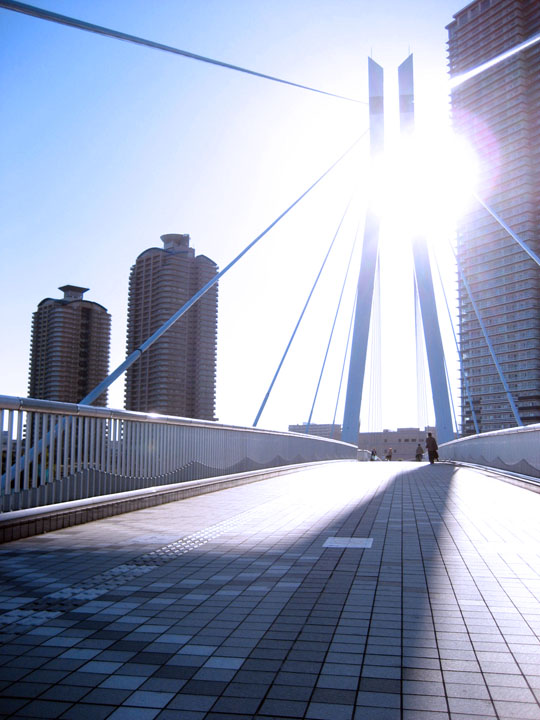
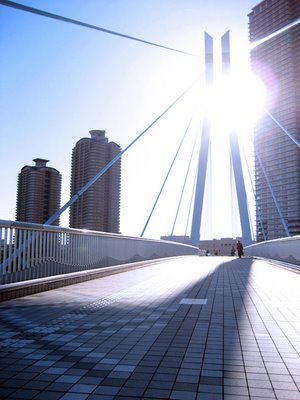
Footbridge from the Yurakucho Metro Stop to Shinonome Canal Court.
Housing for the masses took on great importance during the twentieth century and was heightened by the post-World War II building frenzy in Europe. They began as Utopian government projects, but there has been a major shift over the past several decades towards development by private entities, with an emphasis on housing for the upper to upper-middle classes. Still, governments across the world provide tax breaks and financial incentives to private developers, especially when it comes to converting former industrial lands to new uses. The Docklands in London, which began in the 1980s, exemplify this type of development. With escalating gentrification and the demolition of historical properties, a new set of socio-economic and ideological issues have emerged from this type of development.
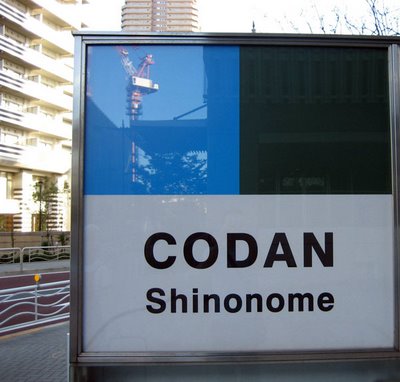
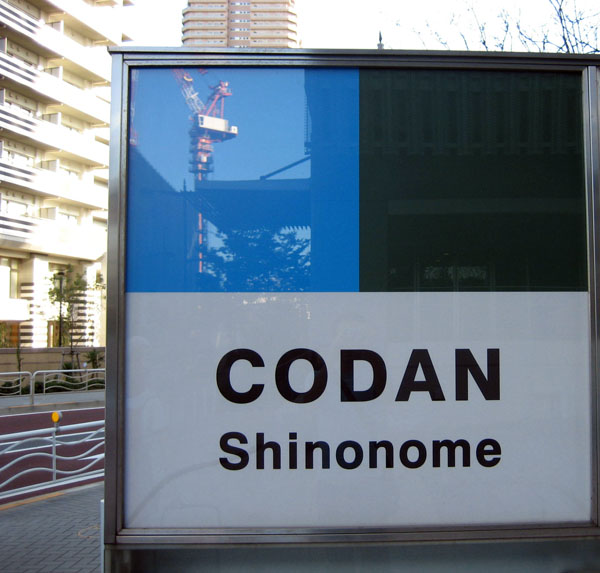
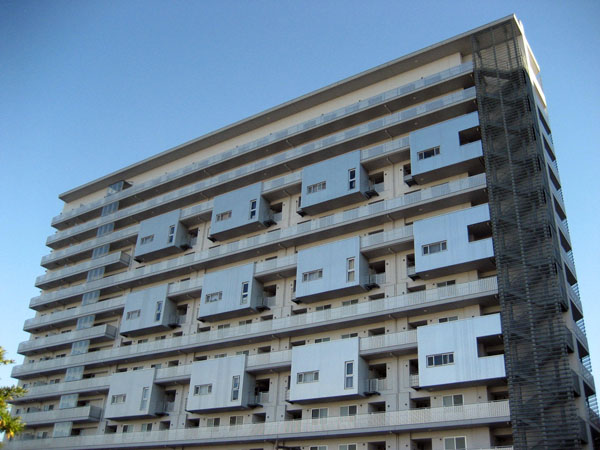
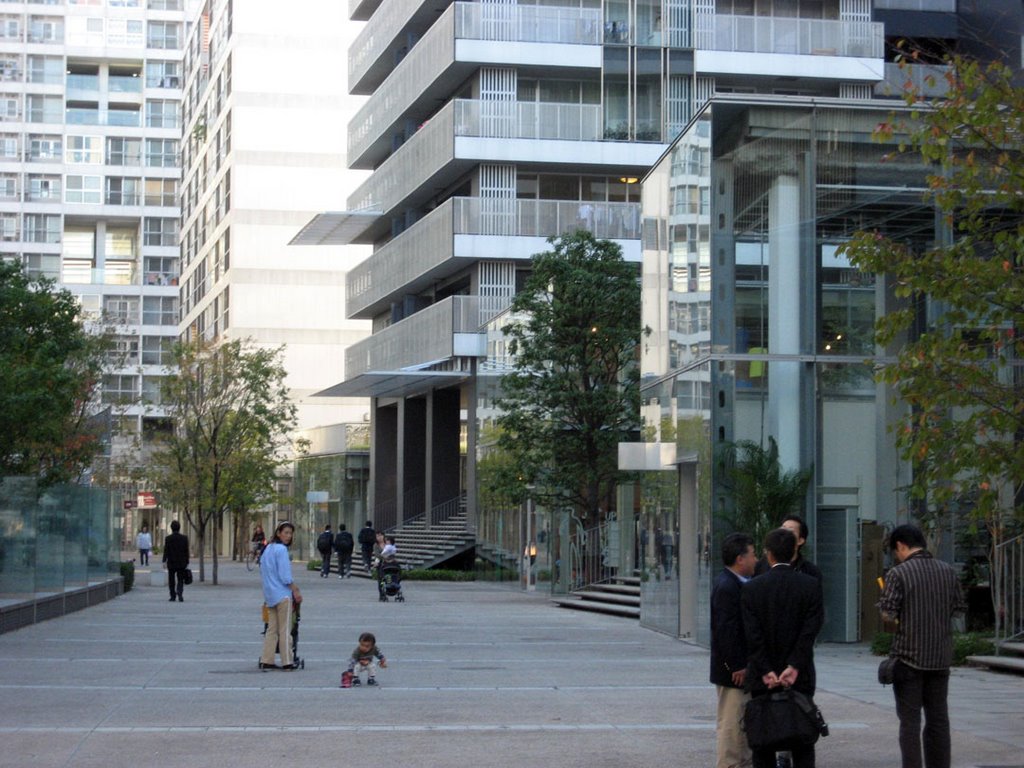
Tokyo's Shinonome Canal Project began in the 1990s as architects, planners, and government officials sought ways to transform an industrial waterfront property that operated until the early 1970s. Kengo Kuma and Toyo Ito were among the most prominent architects to contribute to this large scale development which sits just 5 kilometers from the center of Tokyo. Unlike the Docklands which boast the highrise commercial Canary Wharf tower, Shinonome Canal Project was geared towards developing housing, limited commercial development, parks, and infrastructure. And unlike other current Utopian projects, such as Vancouver's point tower model, this housing is mostly mid-rise. If Vancouver's model embraces slender "towers on a podium," Shinonome's model might be considered "block on a podium." As a result, there is less open space on the ground plane (i.e., less green space), but the housing is much less hierarchical and a bit more human-scale.
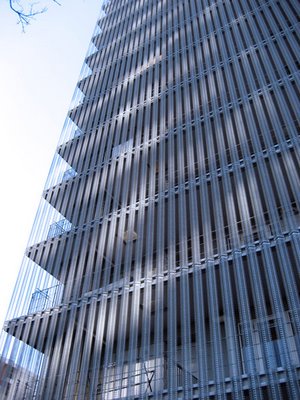

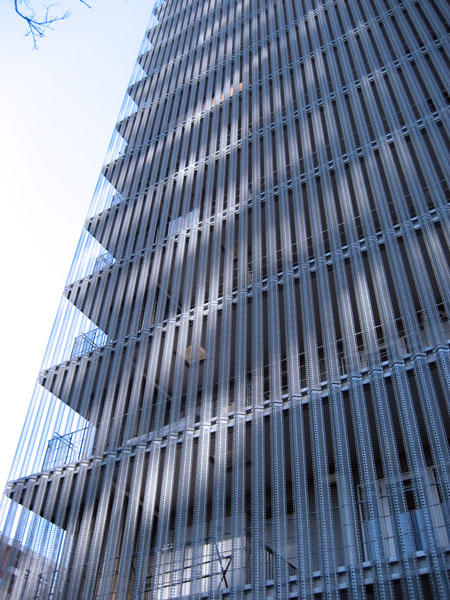
Screens.
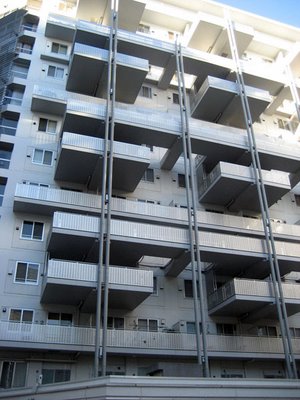
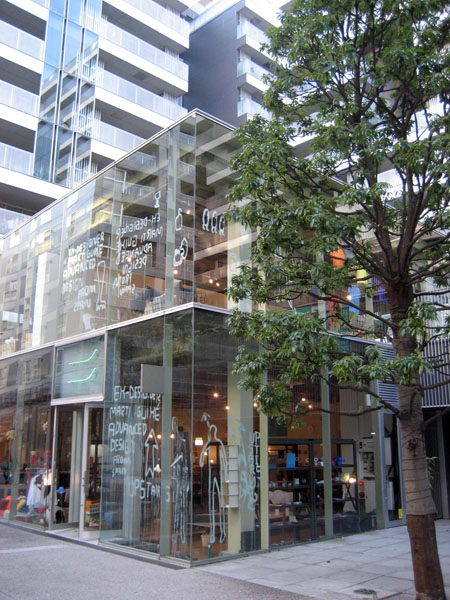
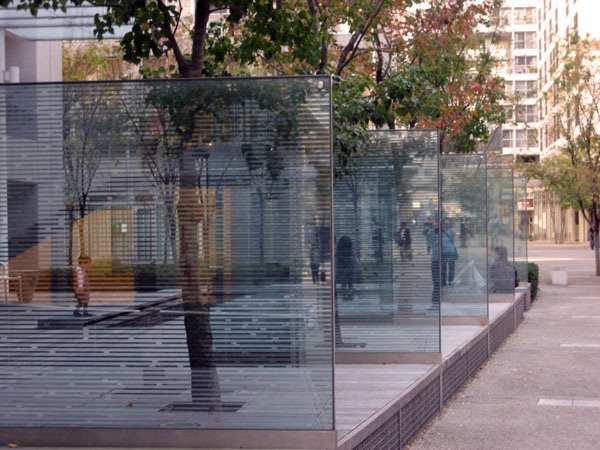
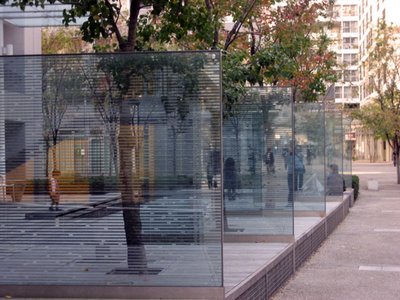
Through the use of various modern materials, some amount of privacy is achieved between living spaces and commercial spaces at the ground level.
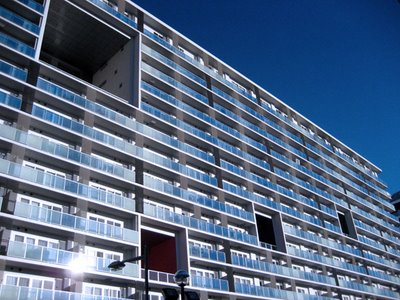
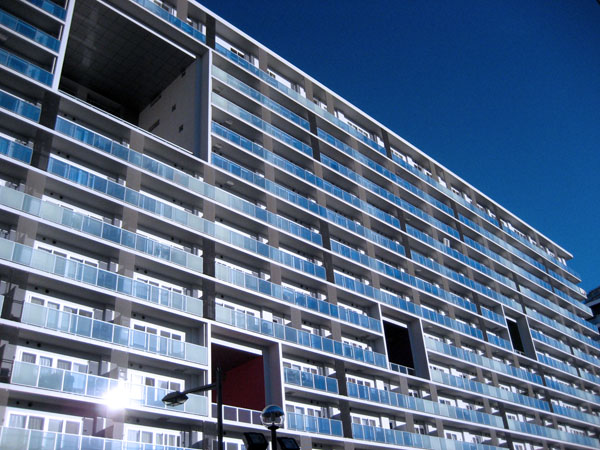
Common Voids.
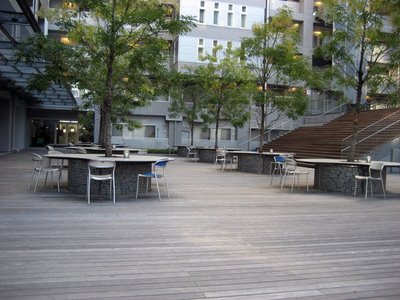
The large voids in Toyo Ito's project provide common amenity spaces.
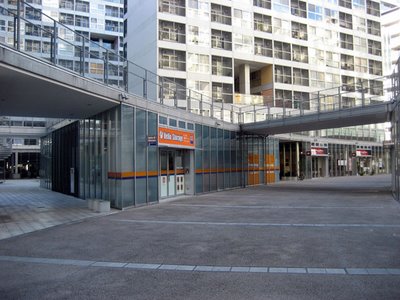

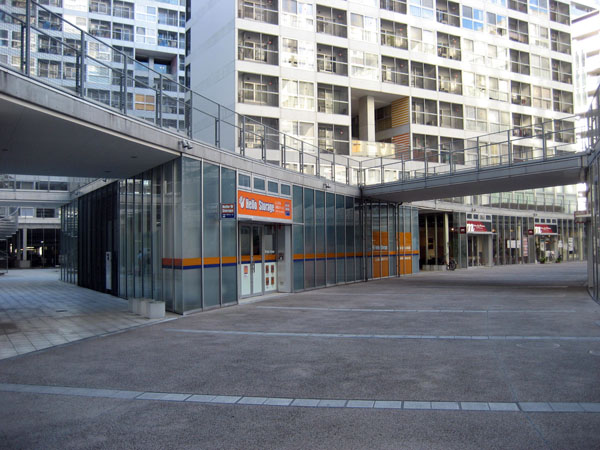
Commercial Cut.
The ground plane offers retail, preschools, gallery spaces, and more. The next level provides common space for residents; its separation from commercial activity lends it a more residential feel.
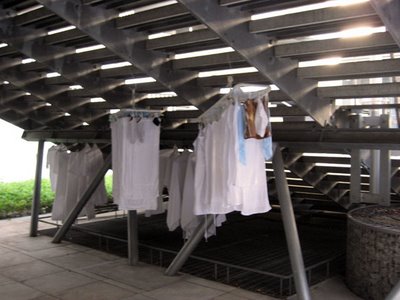
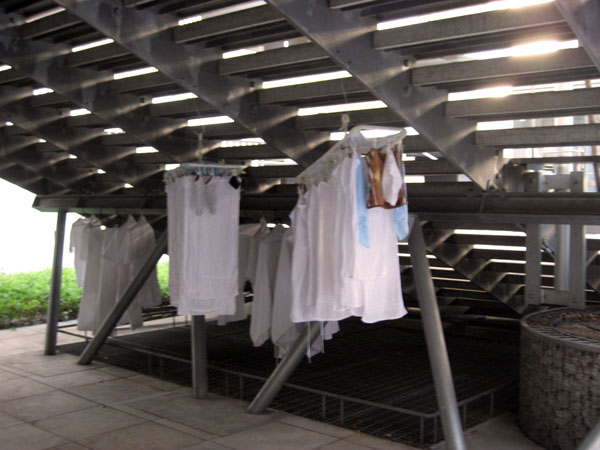
Public / Private.
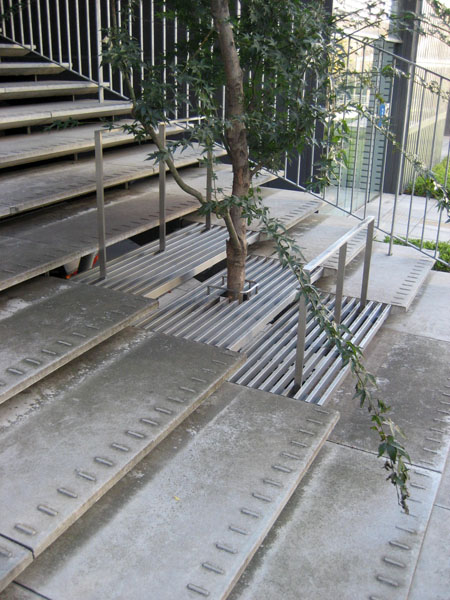
Large master planned spaces tend to feel over-regulated and too well defined - just ask any Vancouverite living in Coal Harbour. Thus, it's encouraging to see that some residents here take the liberty to hang clothes under a public stair.
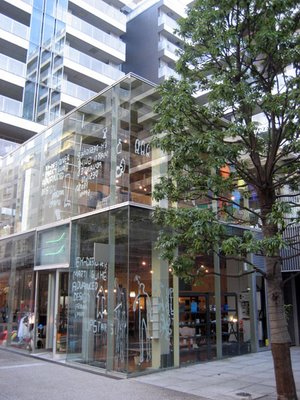
Gallery Space.
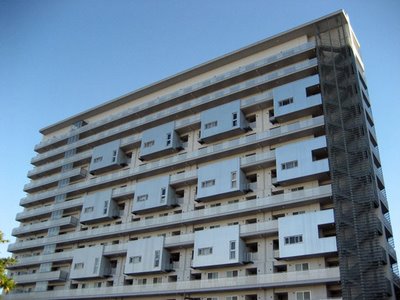

Extrusions.
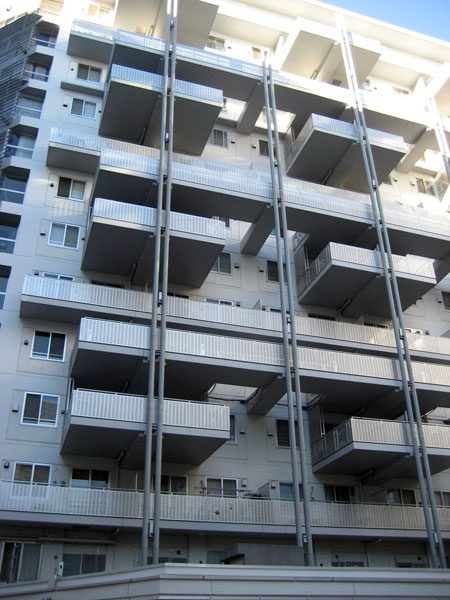
These extruded spaces may provide a buffer of privacy between the interior and exterior spaces.
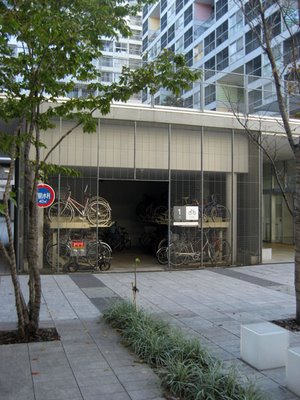

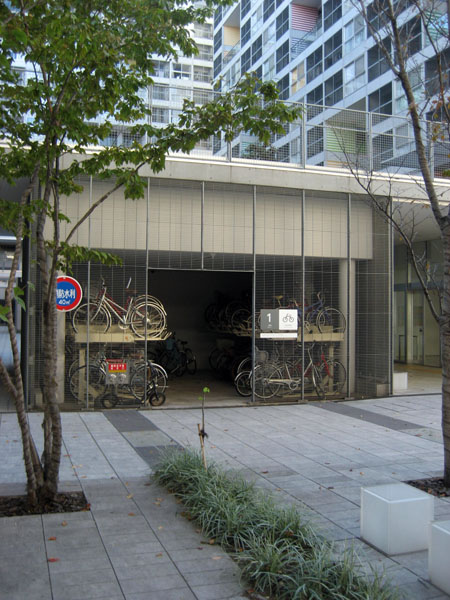
Bicycle Parking Garage.
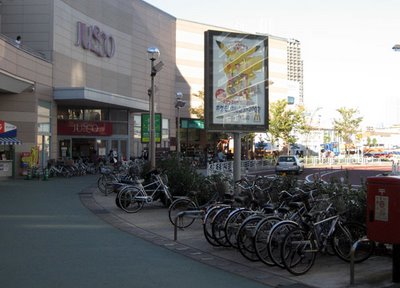
The Local Grocery Store.
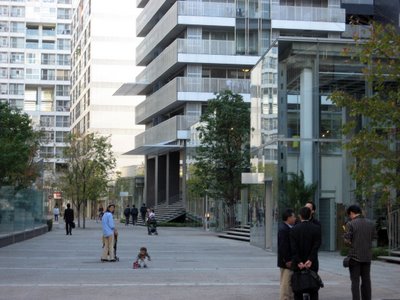
If you lived here, you would be home by now.

Semi-private spaces.
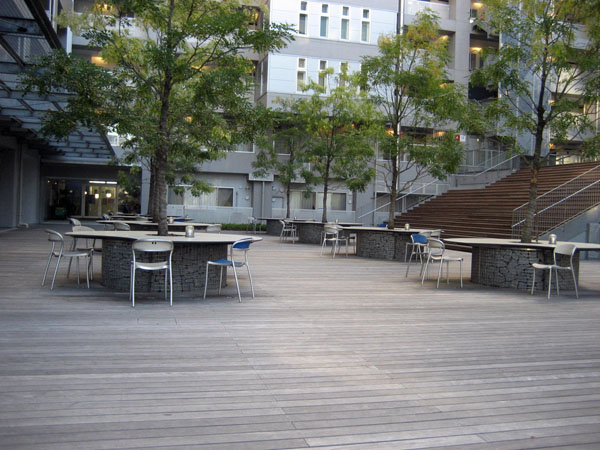
These areas are located a level above the commercial zone and provide the opportunity for mingling with neighbors... Though at this moment, there was no one to mingle with.
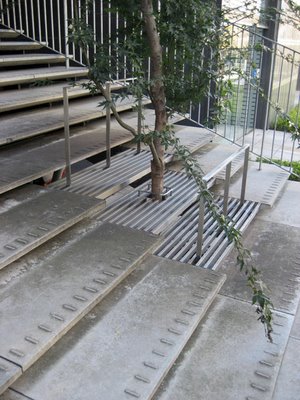
Room for Growth.
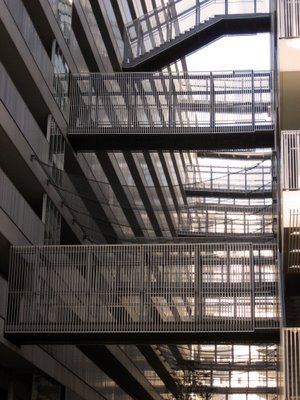
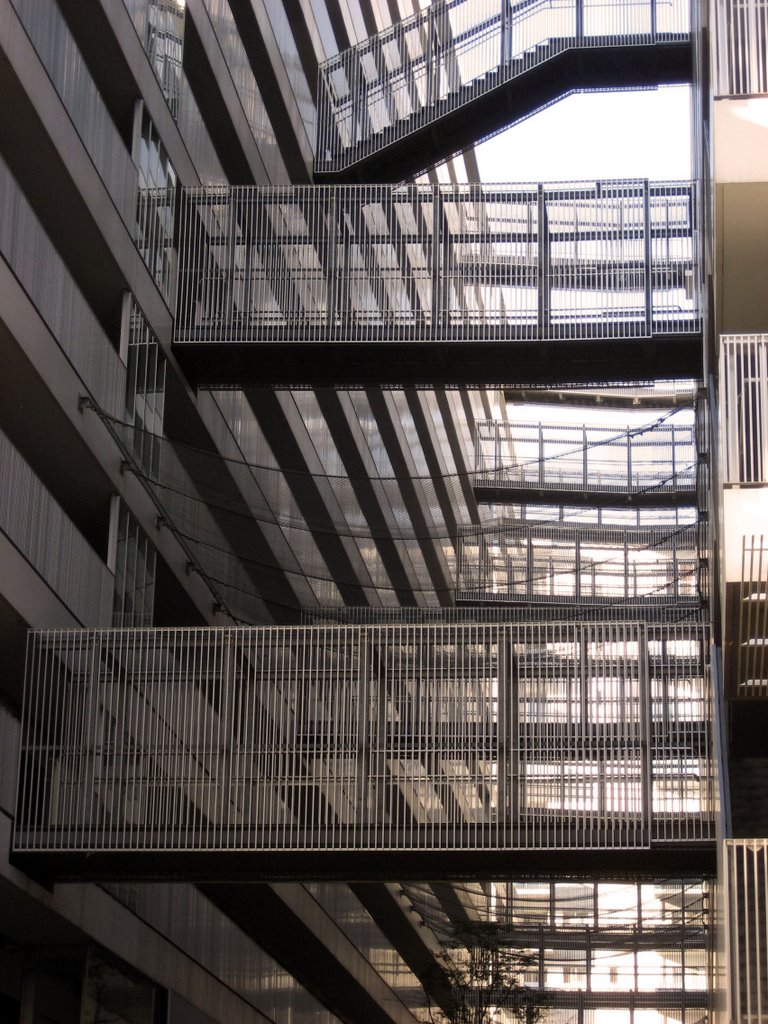
Screened Passages on Kengo Kuma's project.

T

11/15/2006

Drawn to the Light[ness] II.

...More shots from Tokyo's Aoyama/Harajuku area. It's as if the building above was dropped by a twister from Europe; I have seen nothing else like it in Tokyo.

Lost Girl /Future Prada Customer?
The Prada flagship building by Pritzker Prize winning firm Herzog & de Meuron possibly attracts as many architects as customers.

Solitary Customer Climbs Stair.
Mannequins in the Window.

T

Just Say No.

Just say no... to everything.
This sign was seen near a busy public space in Ebisu and was clearly erected by fear from... hmmm, from bourgeois tourists? Who knows.

[note: I clearly risked extradition by photographing the sign that prohibits photography.]

T

Drawn to the Light[ness].

Kazuyo Sejima and Ryue Nishizawa of SANAA designed the flagship Dior and HHstyle buildings in Aoyama. Whatever one may think of their architecture, it certainly lives up to the reputation for lightness and transparency.


T

11/13/2006

Old Man & The City.

I'm always impressed by the shear number of elderly people who bike, traverse endless flights of stairs at train stations, and walk block by block of the city. Tokyo moves fast, but these people refuse to be left behind. With this in mind, a friend of mine jokingly made the point that our American and Canadian brethren are perhaps all too eager to toss in the towel and go for the powered scooters.

With a fish-based diet, nationalized health care for all citizens, and exercise through routine activity, the Japanese have the fourth highest life expectancy in the world. Canada ranks ninth, and the U.S. - the world's number one superpower - rates behind Jordan and Bosnia / Herzegovina at number 29.

Waiting for his Train to Come In.
Public benches in the city are appallingly short on supply, but that probably stems from the uber-crowded nature of Tokyo.
This man is waiting for the Yamanote train at Okachimachi Station.

T

Stacked Cars.

Look carefully at the lit up button consoles above - they display the organization of parked cars on the tall oblong carousels. Unlike parking garages, these parking carousels obviate the need for ramps, allow for an efficiently packed building of cars, and take up a much smaller building footprint.

Turntables.
When the owner is ready to leave, the attendant brings the car down to ground level, backs it up onto the turntable, and spins the car around so that the owner can easily enter the busy street grid.

Lights are On, but Someone's Not Home.
Stacked cars are common with smaller scale housing as well.

T

11/12/2006

Tokyo Rockabilly.

These buskers in Tokyo's Yoyogi Park routinely mix rockabilly sensibilities with Elvis looks and of course, a few breakdance moves for good measure.

"Uh yeah, make that a dozen peanut butter / banana tempura for delivery. Uh thank ya, thank ya very much."

I've also posted awe-inspiring video footage here.

T

More Hakone.

The trip from Shinjuku station in Tokyo to Hakone takes about 1.5 hours. Once in the area, a combination of train, funicular rail, gondola, ferry/pirate ship, and bus moves visitors through the area. Thus, the need for cars and parking is greatly reduced. In order to reduce smog and traffic jams, national parks such as Yellowstone and Yosemite desperately need to implement similar measures.

Smoking Mountainside.

Iconic Mt. Fuji.

Hordes of Visitors.
With 35 million people nearby, don't expect to find solitude on a trip to Hakone. The crowds were staggering, and this trip was made on a weekday. Of course, autumn also brings out particularly large crowds.

T

11/11/2006

Arggh, matey-san!

The scene felt like a strange hybrid of Japanese-Swiss Family Robinson and an overcrowded Haitian refugee boat. Naturally, someone made the brilliant decision to use faux pirate ships as passenger ferries on Lake Ashinoko, which lies in the shadow of Mt. Fuji. I'm not sure if the rampant use of kitsch across Japan is the result of poor taste or a wicked sense of humor, or some combination of the two. Whatever the cause, sometimes you just have to give in, take snapshots, and laugh.

Aaargh, nothing like me camera and beer in hand on the high seas.

An enemy pirate ship, er, ferry steers clear of our path.

More to come on the Japanese tourist mecca of Hakone...

T

O' Venerable Giant.

Mt. Fuji, which rarely makes an appearance, was spotted today from the smoking valley of Hakone. In the foreground, the volcanic sulphurous springs of Hakone release toxic gasses into the air. More to come...

T

11/10/2006

Light at the End of the Tunnel.

After a long cavernous journey on the Yurakucho subway line, large Japanese maples and a brilliant blue sky are framed by an exit back into the city.

11/08/2006

Parking on Parks?

The Postcard View.
The Not-Rated-for-Postcard View.

What better way to enjoy the waning days of warmth than on a bed of soft grass in the sunshine? Nestled between Shinjuku and Shibuya, Yoyogi Park provides Tokyo a rare refuge from the built environment. Compared to other major cities, Tokyo rates poorly when it comes to dedicated park space per person. In fact, Tokyo residents have only 5 square meters of park space per person, compared with New York City's 25 square meters per person, for example. See The Trust for Public Land and Tokyo Planning sites for more info.

Sunbathing Cars?
When space is at such a premium, why is grass in one of Tokyo's prime parks used for parking? Try imagining this in New York's Central Park or London's Hyde Park! Whether you think as an economist or naturalist (or both), the situation is mindless.

To be fair, Yoyogi Park has Meiji Shrine - one of the city's most important shrines - and some nice woodland. Additionally, its park status was only established in 1967 after serving as a residential area for U.S. military and later as a site for the Olympics. Still, Tokyo's paltry park system needs to catch up with other world class cities.


T